Sunday, September 20, 2015
Promote Writing That Deals With Cancer
On Twitter, use the hashtag #WritersUnitingAgainstCancer and post about books, blogs, etc. that deal with cancer and/or raise money for the fight against cancer.

Monday, April 14, 2014
Saturday, June 01, 2013
Reviews of Free Humor Book, Fat Diary
“Since the book's available in all ebook formats completely for free, I would ask everyone to have a look at this great short story. Trust me, it's worth your time.” –from Tista Ray’s review of Fat Diary.
“Well worth the read for the laughs!” –from SheWolfCat’s review of Fat Diary.
Fat Diary also appears in The Acorn Gathering. Some of its characters also appear in The Acorn Stories.
Free eBook at Smashwords. Categories: humor, comedy, short story, fiction.
Friday, April 19, 2013
Saturday, March 30, 2013
Trailer for Fat Diary, a Free Comedy eBook by Duane Simolke.
Fat Diary.
In this free comedy eBook, a West Texas librarian makes fun of herself and the other people in her town, while writing about her reasons for wanting to lose weight.
Pamela Mae Willard must learn to love herself. Still, she can’t resist laughing about her problems, and about the adventures of the colorful characters in Acorn, Texas.
This irreverent, politically incorrect tale reveals a woman finding joy in life, no matter what happens to her and no matter who mistreats her.
This short story also appears in The Acorn Gathering. Some of its characters also appear in The Acorn Stories.
Sunday, May 13, 2012
10 Years of Acorn Gathering
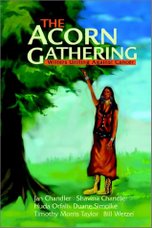
10 years ago, the publication of The Acorn Gathering: Writers Uniting Against Cancer offered readers the chance to buy a collection of short fiction, with all royalties going to the fight against cancer. Today, it is still available in paperback, and now in eBook format, with the same mission. With cancer constantly affecting our lives, I’m proud to have taken part in that project and hope you’ll take the time to read more about it .
The writers who joined me in donating their writings made it a memorable collection. I also want to acknowledge the memory of John Mudd, a blog innovator who both helped the project happen and helped it find an audience.
Saturday, March 17, 2012
Saturday, September 11, 2010
In this live performance on Stand Up To Cancer 2010 (09/10/2010), Green Day’s Billie Joe Armstrong performs their hit song “Wake Me Up When September Ends.”
The following paragraphs introduce “The First Few And the Last Few,” one of the stories I wrote for The Acorn Gathering: Writers Uniting Against Cancer.
The Last Few And the First Few
By Duane Simolke
Dedicated to all people who risk their lives to protect others.
We entered the twenty-first century as we left the twentieth century: with uncertainty. But everything seemed safe for a while, safe and prosperous. Then the economy started to falter. And then September 11 happened.
I arrived in New York City two days after the attacks on the World Trade Center. When I’m not in active duty with the Army, I often work as a volunteer firefighter in El Paso, where my mother lives, or in Acorn. In case you haven’t heard of it, Acorn is a little town in West Texas, population 21,001. After my family left an even smaller town called “Ropesville,” I grew up in Acorn; my brother recently became the sheriff there, and I visited him for a while before coming on up here. It’s my first time up this far north in the states, though I’ve done quite a bit of traveling in my life.
I expected a call soon, one that would again cause me to travel. And, like the one I got just after I signed up with the Army, those travels would take me to a hostile, foreign land. In the meantime, I wanted to do what I could here. Everyone knows where I am and how to get hold of me, though I actually need to go back to the hotel and check my messages.
I haven’t slept since arriving at Ground Zero. Ground Zero—that’s what they’re calling the area of destruction. My mother, always biased, has been telling everyone that it was heroic of me to come here. The New York City firefighters, police officers, and rescue workers are the real heroes. I’m just helping out where I can. I’ve seen them help countless people already while sifting through the wreckage for survivors.
I’ve seen volunteers of every kind, and I’ve seen every good trait of humanity. New York hardly seems like the cruel, unfriendly place I’ve always heard about. We’re all doing what we can.
The team I was with finally convinced me to take a break. Instead of going back to the hotel, I walked a block away and collapsed in an alley, leaning against a building.
As I sit here, catching my breath, still wearing my helmet and my protective jacket, I reach into the pocket of my jeans to find an envelope, now all folded up and crinkled.
The following paragraphs introduce “The First Few And the Last Few,” one of the stories I wrote for The Acorn Gathering: Writers Uniting Against Cancer.
The Last Few And the First Few
By Duane Simolke
Dedicated to all people who risk their lives to protect others.
We entered the twenty-first century as we left the twentieth century: with uncertainty. But everything seemed safe for a while, safe and prosperous. Then the economy started to falter. And then September 11 happened.
I arrived in New York City two days after the attacks on the World Trade Center. When I’m not in active duty with the Army, I often work as a volunteer firefighter in El Paso, where my mother lives, or in Acorn. In case you haven’t heard of it, Acorn is a little town in West Texas, population 21,001. After my family left an even smaller town called “Ropesville,” I grew up in Acorn; my brother recently became the sheriff there, and I visited him for a while before coming on up here. It’s my first time up this far north in the states, though I’ve done quite a bit of traveling in my life.
I expected a call soon, one that would again cause me to travel. And, like the one I got just after I signed up with the Army, those travels would take me to a hostile, foreign land. In the meantime, I wanted to do what I could here. Everyone knows where I am and how to get hold of me, though I actually need to go back to the hotel and check my messages.
I haven’t slept since arriving at Ground Zero. Ground Zero—that’s what they’re calling the area of destruction. My mother, always biased, has been telling everyone that it was heroic of me to come here. The New York City firefighters, police officers, and rescue workers are the real heroes. I’m just helping out where I can. I’ve seen them help countless people already while sifting through the wreckage for survivors.
I’ve seen volunteers of every kind, and I’ve seen every good trait of humanity. New York hardly seems like the cruel, unfriendly place I’ve always heard about. We’re all doing what we can.
The team I was with finally convinced me to take a break. Instead of going back to the hotel, I walked a block away and collapsed in an alley, leaning against a building.
As I sit here, catching my breath, still wearing my helmet and my protective jacket, I reach into the pocket of my jeans to find an envelope, now all folded up and crinkled.
Thursday, August 05, 2010
Visit Goodreads to discuss The Acorn Gathering's stories, themes, and authors, or the fight against cancer.
Sunday, August 01, 2010
Visit Blackfeet Indian History to learn about Blackfeet Indians and other Native Americans. Bill Wetzel, one of the authors of The Acorn Gathering, is a Blackfeet Indian and wrote about reservation life in one of the stories he contributed to that collection.
Subscribe to:
Posts (Atom)